

Delving into the realm of open concept homes, where the boundaries blur and space beckons for innovation. From seamless flow to strategic furniture placement, let's explore the art of interior layout ideas for these modern abodes.
Design Principles for Open Concept Homes
Creating a cohesive and functional layout in an open concept home involves following key design principles to ensure a harmonious flow between different areas. Here are some tips to consider:
Creating Flow Between Different Areas
In an open concept layout, it is essential to establish visual and physical connections between various spaces. To achieve this, consider using consistent flooring throughout the space to create a seamless transition. Additionally, using area rugs or furniture groupings can help define specific zones within the open layout while maintaining a sense of continuity.
Maximizing Natural Light and Ventilation
Natural light and ventilation are crucial elements in open concept homes to create a bright and airy atmosphere. To maximize natural light, consider strategically placing windows and glass doors to allow sunlight to penetrate deep into the space. Incorporating skylights or light wells can also help bring in additional natural light.
Furthermore, promoting cross ventilation by strategically placing windows and doors can enhance air circulation and create a comfortable indoor environment.
Choosing Cohesive Color Palettes and Materials
Selecting a cohesive color palette and materials is key to achieving a unified look in an open concept design. Opt for a neutral color scheme with pops of accent colors to create a sense of harmony and balance throughout the space.
When it comes to materials, choose finishes that complement each other and create a cohesive aesthetic. Consistency in color and material choices will help tie different areas together and create a cohesive overall look in your open concept home.
Furniture Arrangement Ideas
When it comes to open concept homes, furniture arrangement plays a crucial role in defining separate zones while maintaining a cohesive look and flow throughout the space. By strategically placing furniture, you can create designated areas for different activities without sacrificing the openness of the layout.
Creating Separate Zones
One effective strategy for defining separate zones within an open concept layout is to use furniture as a visual divider. For example, you can position a sofa or a bookcase to delineate the living room area from the dining space.
This not only helps in creating distinct areas but also adds a sense of coziness and intimacy to each zone.
Facilitating Traffic Flow and Conversation
To ensure smooth traffic flow and encourage conversation in open concept spaces, consider the layout of your furniture. Arrange seating areas in a way that allows for easy movement between zones. For instance, place chairs and sofas facing each other to promote interaction and create a welcoming atmosphere.
Use of Area Rugs and Lighting
Area rugs and lighting are essential elements in delineating different functional areas in an open concept home. By placing a rug under a dining table or a coffee table, you can visually separate the dining or living area from the rest of the space.
Additionally, strategic lighting fixtures such as pendant lights or floor lamps can help define specific zones and create a sense of ambiance.
Kitchen Design in Open Concept Layouts
When it comes to designing the kitchen in an open concept layout, there are several key elements to consider in order to create a cohesive and functional space.
Incorporating Kitchen Islands or Peninsulas
One innovative way to incorporate a kitchen island or peninsula in an open concept kitchen is by using it to define the space between the kitchen and the rest of the living area. This can help create a visual separation while still maintaining an open feel.
Additionally, adding seating to the island or peninsula can provide a casual dining area for family and guests.
Role of Kitchen Cabinetry and Appliances
- Choose cabinetry and appliances that complement the overall design aesthetic of the open concept home. Opt for sleek, modern finishes or classic, timeless styles depending on the look you want to achieve.
- Consider integrating panel-ready appliances that blend seamlessly with the cabinetry to maintain a cohesive look throughout the space.
- Use consistent hardware finishes on cabinetry and appliances to tie everything together and create a unified appearance.
Integrating Kitchen Storage Solutions
Integrating kitchen storage solutions into an open concept design is crucial for maintaining a clutter-free and organized space. Consider the following ideas:
- Utilize built-in pantry cabinets or pull-out shelves to maximize storage space without sacrificing style.
- Incorporate open shelving to display favorite dishes or cookware while adding a decorative element to the kitchen.
- Opt for multi-functional furniture pieces, such as kitchen islands with built-in storage or bar carts, to provide additional storage options.
Flooring Options for Open Concept Spaces
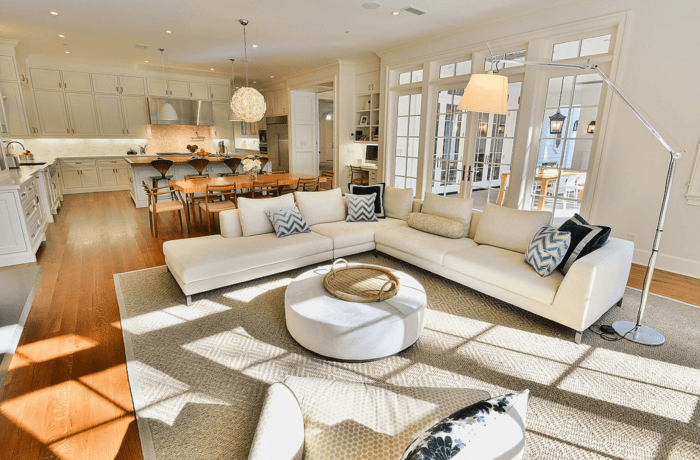
When it comes to flooring options for open concept spaces, choosing the right material is crucial for both durability and aesthetic appeal. The flooring you select can significantly impact the overall look and feel of your home.
Types of Flooring Materials
- Hardwood: Hardwood floors are a popular choice for open concept homes due to their timeless appeal and durability. They can add warmth and elegance to the space.
- Laminate: Laminate flooring is a budget-friendly option that mimics the look of hardwood or stone but is more affordable and easier to maintain.
- Tile: Tile flooring is a versatile option that comes in various colors, sizes, and patterns. It is a great choice for high-traffic areas like the kitchen or entryway.
- Vinyl: Vinyl flooring is durable, water-resistant, and available in a wide range of styles. It is a practical choice for families with children or pets.
Uniform vs. Mixed Flooring Materials
Having a uniform flooring material throughout the open concept space can create a cohesive and seamless look. It can make the space appear larger and more unified. However, using different flooring materials can help define separate areas within the open layout, such as designating the living room from the dining area.
Tips for Transitioning Between Flooring Materials
- Use transition strips: Transition strips are designed to create a smooth transition between different types of flooring materials. They can help prevent tripping hazards and provide a polished finish.
- Consider layout and traffic flow: When transitioning between flooring materials, think about how people will move through the space. Ensure that the transition is placed in a logical and convenient location.
- Match colors or textures: If you choose to mix flooring materials, try to coordinate colors or textures to create a cohesive look. This can help tie the different areas together visually.
Last Recap
As we wrap up our exploration of interior layout ideas for open concept homes, remember that a harmonious blend of design principles, furniture arrangement, kitchen design, and flooring options can truly transform a space. Embrace the openness and let your creativity flow within these versatile layouts.
Essential Questionnaire
How can I create flow between different areas in an open concept layout?
To create flow, consider using cohesive color palettes, maintaining consistency in flooring materials, and strategically placing furniture to define separate zones.
What are some innovative ways to incorporate kitchen islands in open concept kitchens?
You can use a kitchen island to define the kitchen area while also providing additional storage, seating, and workspace in open concept layouts.
Is it advisable to have a uniform flooring material throughout an open concept space?
Having a uniform flooring material can create a sense of continuity and spaciousness in open concept homes, but it's essential to choose a durable and aesthetically pleasing option.
How can lighting be used to delineate different functional areas in an open concept home?
Strategic lighting placement can help define various zones within an open concept space, creating ambiance and highlighting specific areas for different activities.

