

Embark on a journey of home improvement with our comprehensive guide on How to Install Siding on Your Own (DIY Guide). From the basics to pro tips, this article will equip you with the knowledge needed to tackle this project with confidence.
Introduction to Siding Installation
Siding is a crucial component of home construction, serving as the outer layer that protects the structure from the elements. It not only enhances the aesthetic appeal of a house but also provides insulation and durability. Installing siding on your own can be a rewarding DIY project that allows you to customize your home's exterior according to your preferences.
Benefits of DIY Siding Installation
- Cost-saving: By installing siding yourself, you can eliminate labor costs associated with hiring professionals, making it a budget-friendly option.
- Personalization: DIY siding installation gives you the freedom to choose the type, color, and style of siding that best suits your taste and complements your home.
- Sense of accomplishment: Completing a siding installation project on your own can be a fulfilling experience and boost your confidence in tackling future home improvement tasks.
Planning and Preparation
Before starting the siding installation process, it is crucial to plan and prepare adequately. This involves gathering the necessary tools and materials, accurately measuring the area, and choosing the right type of siding for your project.
Tools and Materials Needed
- Vinyl siding panels
- Siding nails
- J-trim
- Utility knife
- Tape measure
- Level
- Hammer
- Caulking gun
Importance of Accurate Measurement
Accurately measuring the area where the siding will be installed is essential to ensure you purchase the right amount of materials. Measure the height and width of each wall, calculate the square footage, and add a bit extra for waste.
Choosing the Right Type of Siding
When selecting the type of siding for your project, consider factors such as durability, maintenance, and aesthetics. Vinyl siding is a popular choice for its low maintenance and variety of colors and styles. However, other options like wood or fiber cement siding may better suit your needs depending on your preferences and budget.
Preparing the Work Area
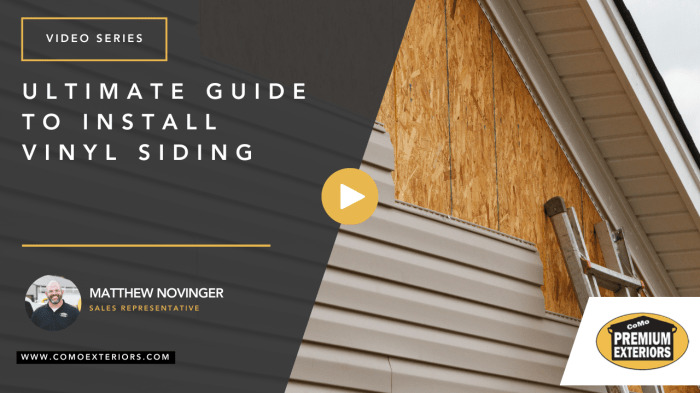
Before starting the siding installation, it is crucial to properly prepare the work area to ensure a smooth and successful process. This involves cleaning and inspecting the exterior walls, as well as addressing any repairs or issues that may affect the installation.
Cleaning and Inspecting the Walls
Prior to installing siding, thoroughly clean the exterior walls to remove any dirt, debris, or mildew that could impact the adhesion of the siding. Inspect the walls for any signs of damage, such as rot, mold, or water stains, and address these issues before proceeding with the installation.
Addressing Repairs and Issues
- Repair any damaged areas: Replace any rotted or deteriorated wood, fix loose or missing trim, and patch up any holes or cracks in the walls.
- Address moisture issues: Ensure proper drainage around the foundation, repair leaky gutters, and fix any other sources of water intrusion to prevent future damage to the siding.
- Check for proper insulation: Inspect the walls for adequate insulation to improve energy efficiency and prevent condensation issues that can affect the siding.
Installing the Siding
Once you have completed the planning and preparation phase, it's time to start installing the siding on your own. Follow these step-by-step guidelines to ensure a successful installation.
Aligning and Securing Siding Panels
Before securing the siding panels, make sure they are properly aligned. Use a level to ensure they are straight and even. To secure the panels, follow these steps:
- Start at one corner of the wall and work your way horizontally.
- Use galvanized nails or screws to attach the panels to the wall studs.
- Leave a small gap between each panel to allow for expansion and contraction.
- Double-check the alignment periodically to avoid any mistakes.
Cutting and Fitting Around Windows, Doors, and Corners
When cutting and fitting siding around windows, doors, and corners, precision is key. Here are some techniques to help you achieve a perfect fit:
- Measure the dimensions carefully and mark the cutting lines on the siding.
- Use a circular saw or tin snips to cut the siding to the proper size.
- Fit the cut pieces around windows and doors, ensuring a snug and secure fit.
- For corners, cut the siding at a 45-degree angle to create a seamless finish.
Finishing Touches and Maintenance
After installing the siding, it is essential to focus on adding finishing touches to give your home a polished look. Additionally, proper maintenance is crucial to ensure the longevity and durability of the siding.
Sealing and Weatherproofing
Proper sealing and weatherproofing are vital to protect your siding from moisture, mold, and other environmental damage. Here are some best practices to follow:
- Inspect the seams and edges of the siding for any gaps or openings that could allow water infiltration.
- Apply a high-quality caulking sealant to seal any gaps or cracks in the siding.
- Consider adding a weather-resistant barrier underneath the siding for extra protection.
- Ensure that all flashing around windows, doors, and corners is properly installed and sealed.
- Regularly inspect the siding for any signs of damage or wear and tear, and address them promptly.
Maintenance Tips
Regular maintenance is key to preserving the appearance and functionality of your siding. Here are some tips to help you care for your siding:
- Clean the siding periodically using a mild detergent and water to remove dirt, grime, and mildew.
- Avoid using abrasive materials or harsh chemicals that could damage the siding's surface.
- Trim any overhanging trees or shrubs that may come into contact with the siding to prevent scratches or damage.
- Inspect the siding annually for signs of damage, such as cracks, chips, or fading, and repair or replace as needed.
- Consider applying a fresh coat of paint or sealant every few years to protect the siding and maintain its appearance.
Conclusion
As we wrap up our discussion on How to Install Siding on Your Own (DIY Guide), remember that with the right tools and techniques, you can transform your home's exterior. Start your DIY siding project today and enjoy the results for years to come.
FAQ Guide
What are the benefits of installing siding on your own?
Installing siding on your own can save you money on labor costs and give you a sense of accomplishment.
How do I choose the right type of siding for my project?
Consider factors like durability, maintenance requirements, and aesthetic appeal when selecting siding for your home.
What are the best practices for sealing and weatherproofing the siding?
Use high-quality sealants and follow manufacturer's instructions to ensure proper sealing and weatherproofing of the siding.
How should I maintain the siding after installation?
Regularly clean the siding, inspect for any damage, and make repairs as needed to maintain its appearance and functionality.

