

When it comes to choosing the right siding for your home, the debate between vinyl and fiber cement options is a common one. Each material has its own advantages and drawbacks that homeowners need to consider. Let's delve into the key differences and benefits of vinyl vs fiber cement siding to help you make an informed decision for your property.
Vinyl Siding
Vinyl siding is a popular choice for home exteriors due to its versatility, affordability, and low maintenance requirements. It is made from PVC (polyvinyl chloride) resin and is available in a wide range of colors and styles to suit different architectural preferences.
Key Features of Vinyl Siding
- Available in various colors and styles
- Resistant to rot, moisture, and insect damage
- Easy to install and lightweight
- Requires minimal maintenance
Advantages of Vinyl Siding
- Affordable compared to other siding options
- Durable and long-lasting
- Does not require painting or staining
- Easy to clean with just soap and water
Durability of Vinyl Siding
Vinyl siding is known for its durability and ability to withstand various weather conditions, including high winds, hail, and extreme temperatures. When properly installed, vinyl siding can last for several decades without fading or deteriorating.
Maintenance Requirements of Vinyl Siding
Compared to fiber cement siding, vinyl siding requires minimal maintenance. It does not need to be painted or stained, saving homeowners time and money on upkeep. Regular cleaning with soap and water is usually sufficient to keep vinyl siding looking fresh and vibrant.
Fiber cement siding
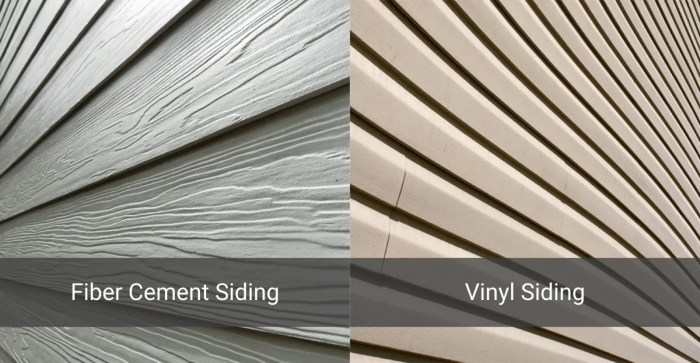
Fiber cement siding is a durable and versatile alternative to vinyl siding, composed of a mixture of cement, sand, and cellulose fibers. This combination creates a strong material that is resistant to rot, fire, insects, and harsh weather conditions.
Composition and Construction
Fiber cement siding is typically made through a process of pressing the materials into sheets or planks, which are then textured and painted to mimic the appearance of wood or other materials. This construction method results in a product that is low-maintenance and long-lasting.
Situation-Based Advantages
- In areas with extreme weather conditions, such as hurricanes or heavy rainfall, fiber cement siding offers superior durability and resistance compared to vinyl siding.
- For homeowners looking for a more natural appearance that resembles wood or masonry, fiber cement siding provides a realistic aesthetic without the maintenance requirements of traditional materials.
Aesthetic Appeal
The aesthetic appeal of fiber cement siding lies in its ability to closely mimic the look of wood, brick, or stone, providing a high-end appearance without the associated upkeep. Additionally, this type of siding comes in a variety of colors and styles to suit different architectural designs and preferences.
Cost-Effectiveness in the Long Run
While the initial cost of fiber cement siding may be higher than vinyl siding, the long-term cost-effectiveness comes from its durability and low maintenance requirements. With proper installation and care, fiber cement siding can last for several decades without needing frequent repairs or replacements.
Durability
Vinyl siding and fiber cement siding are both popular choices for homeowners due to their durability. However, they have different characteristics when it comes to standing up to various climates and extreme weather conditions.
Comparison in Different Climates
In terms of durability in different climates, fiber cement siding tends to perform better than vinyl siding. Fiber cement is resistant to moisture, making it ideal for areas with high humidity or frequent rain
Extreme Weather Conditions
Both vinyl and fiber cement siding can withstand moderate weather conditions well. However, fiber cement siding is known to be more durable in extreme weather situations such as strong winds, hail, or heavy storms. It is less likely to dent, chip, or break compared to vinyl siding, which can be more prone to damage in harsh weather conditions.
Common Issues
When it comes to common issues like rot, mold, or insect damage, fiber cement siding is less susceptible compared to vinyl siding. Vinyl siding can be prone to mold growth, especially in humid climates, and may also be damaged by insects.
Fiber cement, being a more solid material, is less likely to rot or attract pests, making it a more durable option in the long run.
Installation and Maintenance
Installing and maintaining siding is crucial for the longevity and appearance of your home. Let's dive into the installation process and maintenance practices for both vinyl and fiber cement siding.
Installation Process
- Vinyl Siding:Vinyl siding is relatively easy to install, making it a popular choice among homeowners. The process involves attaching the vinyl panels to the exterior walls of the house, starting from the bottom and working your way up. It typically requires basic tools and skills, making it a DIY-friendly option.
- Fiber Cement Siding:Fiber cement siding installation is more labor-intensive compared to vinyl. It involves cutting and fitting the heavy panels precisely, which may require professional installation. The process includes caulking and painting the panels to ensure a seamless finish.
Maintenance Practices
- Vinyl Siding:Vinyl siding is low maintenance, requiring occasional cleaning with a hose and mild soap to remove dirt and grime. Inspect for any cracks or damage that may need repair to prevent moisture infiltration.
- Fiber Cement Siding:Fiber cement siding is durable but requires regular inspections for cracks, chips, or peeling paint. Repainting may be necessary every 5-10 years to maintain its appearance and protect against the elements.
Tips for Maintenance
- Vinyl Siding:Avoid using harsh chemicals or abrasive tools when cleaning vinyl siding to prevent damage to the surface. Additionally, trim any overhanging trees or bushes to prevent scratches or impact damage.
- Fiber Cement Siding:Keep an eye on the caulking around seams and joints to ensure they remain intact and watertight. Regularly inspect the paint finish for any signs of wear and touch up as needed to prevent moisture penetration.
End of Discussion
In conclusion, both vinyl and fiber cement siding offer unique benefits and drawbacks. Understanding the pros and cons of each material can guide you in selecting the best option for your home based on your preferences, budget, and maintenance capabilities.
Whether you prioritize durability, cost-effectiveness, or aesthetic appeal, there is a siding choice that fits your needs.
Commonly Asked Questions
Is vinyl siding more durable than fiber cement siding?
Vinyl siding is generally less durable than fiber cement siding, especially in extreme weather conditions.
What are the maintenance requirements for fiber cement siding?
Fiber cement siding requires regular painting and caulking to maintain its appearance and durability.
Which siding option is more cost-effective in the long run?
Fiber cement siding is usually more cost-effective in the long run due to its durability and lower maintenance needs.

